
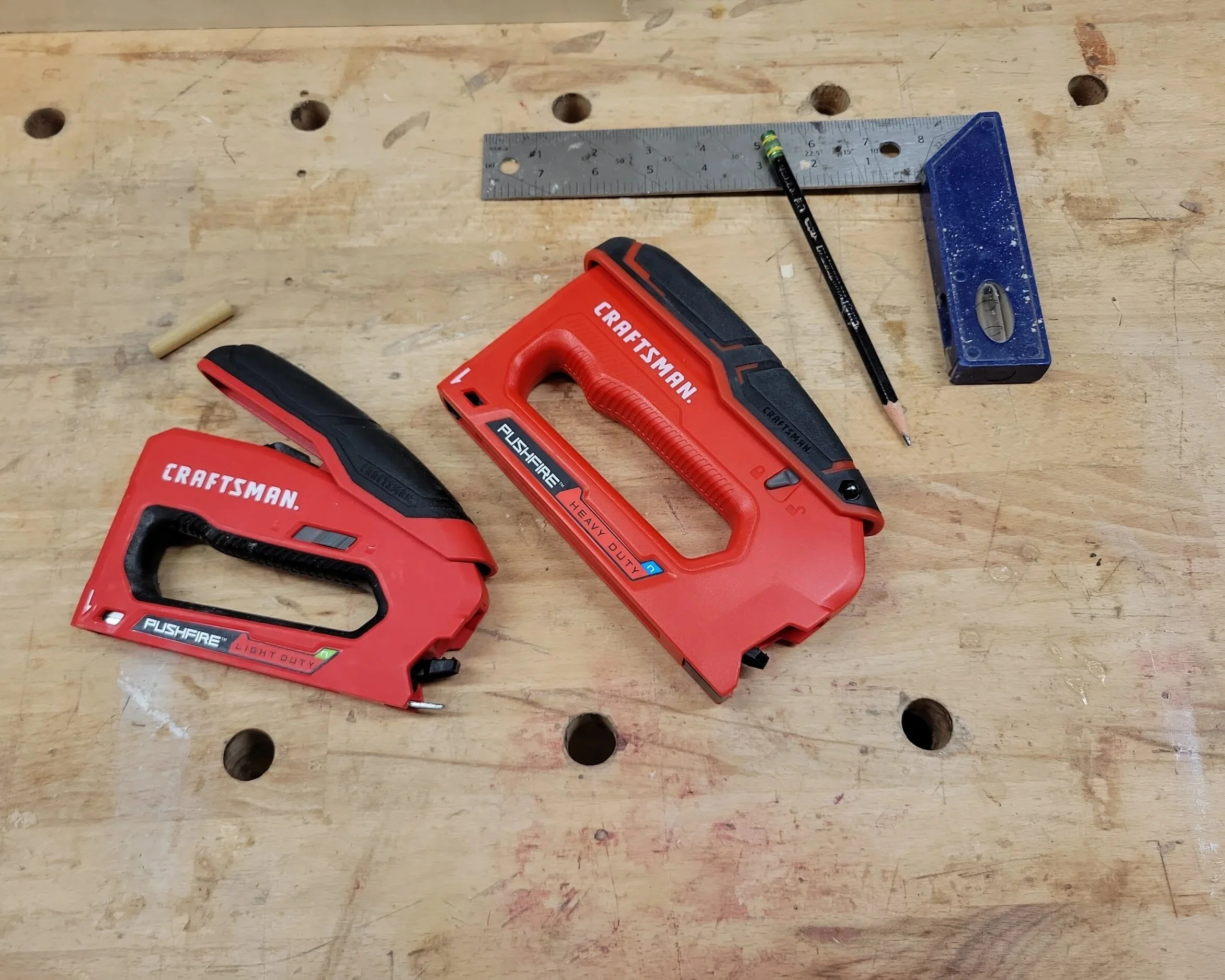
Craftsman Stapler
Craftsman approached this project with a clear objective: rethink a familiar tool that had remained unchanged for too long. The result was an ergonomic reverse-action stapler designed to reduce strain, improve leverage, and create a more intuitive fastening experience.
Every detail was considered through the lens of usability — from the physical interaction of the grip to the clear communication of staple orientation at the point of purchase. The outcome was not simply a redesign, but a refinement of how the tool feels, functions, and integrates into everyday work.
COMPANY: STANLEY BLACK & DECKER
Year
2021
-
Develop a new Craftsman stapler that replaces aging designs and strengthens the brand’s position in the fastening category. The goal was to increase power, improve ergonomics, and deliver a better experience for end users.
-
Multiple rounds of functional prototypes were created and tested across common use cases. These models supported field research and user validation, helping refine grip comfort, trigger mechanics, and application performance.
-
The final design introduced a smaller hand span, improved staple exit visibility, and enhanced user confidence through better ergonomics and labeling. It brought a clear user benefit while differentiating Craftsman in a competitive category.
refreshing a core product for modern users
Craftsman aimed to reestablish leadership in the fastening category by replacing outdated stapler models with a more capable, user-friendly tool. This project focused on understanding user frustrations—like hand fatigue and confusion over staple orientation—and delivering a solution that addressed those gaps while aligning with brand values.
designing for comfort and clarity
Field testing and user research revealed key opportunities to improve both the tool and the overall user experience. Ergonomic refinements—such as a reduced hand span and improved grip geometry—were guided by real-world feedback, resulting in a stapler that performs comfortably over extended use.
Beyond the tool itself, research also uncovered confusion at retail around staple compatibility. In response, a new label design was introduced using the standard staple gauge, helping users shop with confidence and reducing friction at the point of purchase.